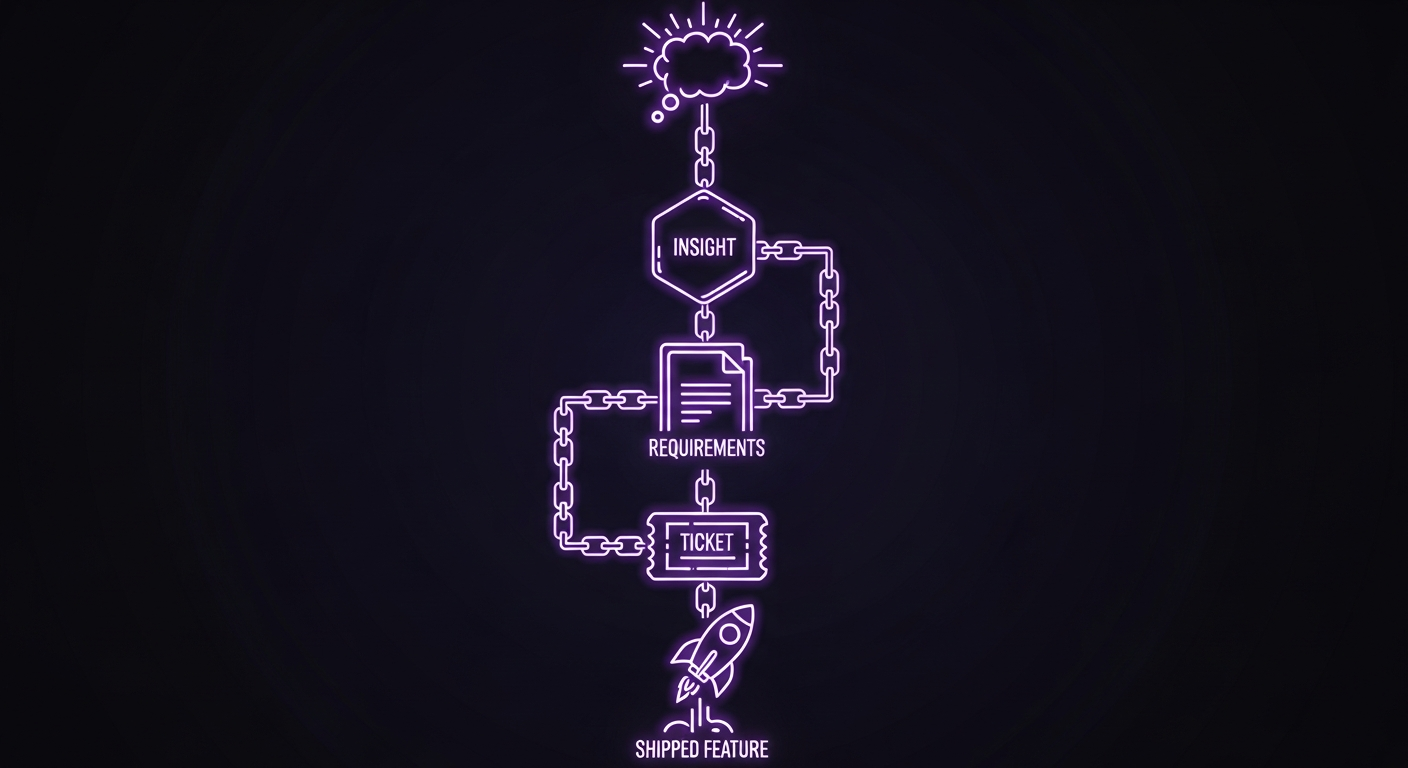
Imagine being able to show a stakeholder this: a customer named Elena said in an interview on March 14th, "I spend my whole Monday morning moving data between tabs before I can send the exec report." That quote became insight #47 in your research repository: "Finance operators lose 3–4 hours per week on manual data preparation before reporting." That insight drove requirement 3.2 in the PRD for the Export module. That requirement generated Jira ticket ENG-412. That ticket shipped in the March 28th release.
Elena's Monday morning problem is now a shipped feature. And you can prove it.
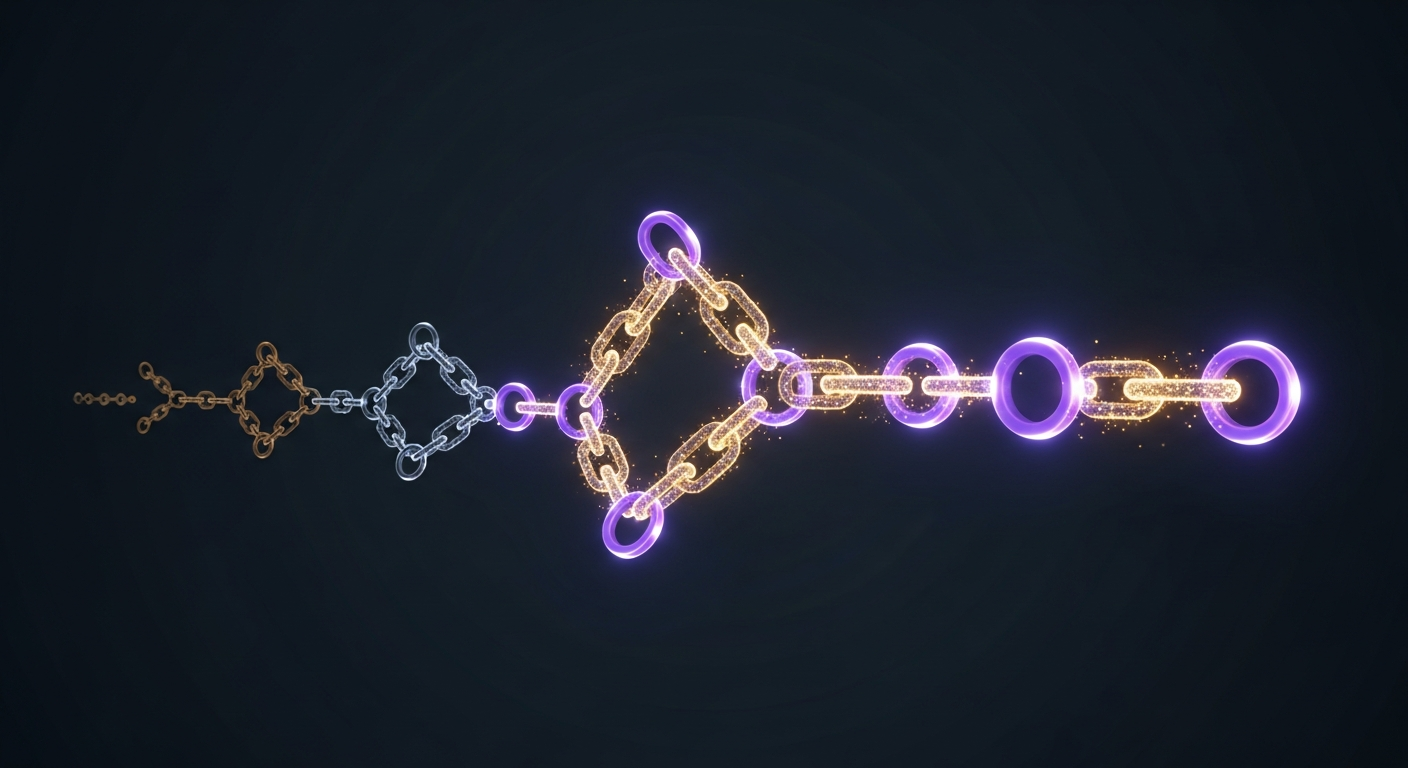
This is the evidence chain. It's the difference between saying "we build based on customer feedback" and actually being able to demonstrate it.
Why the Evidence Chain Matters
The evidence chain isn't just a documentation best practice — it changes how your organization makes decisions.
For prioritization
When you're deciding between two features, being able to show that Feature A is supported by 8 pieces of evidence from 5 customer segments while Feature B is supported by 2 pieces of evidence from 1 enterprise customer makes the conversation concrete instead of political.
For stakeholder trust
Executives, board members, and investors who can see that your roadmap traces directly to customer evidence make funding and strategic decisions with more confidence. "We built this because customers are struggling with X" is compelling. "Here are six quotes from customers struggling with X" is undeniable.
For team motivation
Engineers who can see the customer quote behind the ticket they're working on build differently. The feature is no longer an abstract specification — it's a real person's frustration that they're eliminating. That context matters.
Building the Chain: Layer by Layer
Layer 1 — Raw research artifacts
Interview transcripts, survey responses, support tickets, NPS comments, usage data exports. The raw material. These should live in a searchable repository, not in a folder structure that requires knowing what you're looking for.
Layer 2 — Extracted insights
Structured observations derived from the artifacts. Each insight has: a title, a description, supporting evidence (quotes or data), a theme tag, and links to the source artifacts. Insights are the unit of synthesis — they're what you reason with.
Layer 3 — PRD requirements
Each requirement cites the insights that justify it. The relationship is explicit: this requirement exists because of insights 12, 18, and 23. Anyone reading the PRD can navigate to those insights and see the evidence.
Layer 4 — Engineering tickets
Each ticket links to the PRD requirement it implements. The ticket description includes customer context and links upstream.
Layer 5 — Shipped feature
When the feature ships, the chain is complete. From release notes to customer evidence in five hops.
Maintaining the Chain
The chain breaks down when any link is missing or disconnected. Common failure points:
Research that isn't systematically extracted into insights
PRD requirements that aren't linked to evidence
Engineering tickets that don't reference requirements
The fix is making the chain part of your team's workflow, not an optional documentation step. Evidence tagging happens at the point of research extraction, not retrospectively. Requirement citations happen when the PRD is written, not added later. Ticket linking happens during sprint planning, not after the sprint closes.
The Organizational Benefit
Teams that maintain the evidence chain develop something valuable: institutional product memory. Research from 18 months ago is accessible and connected to the decisions it influenced. New team members can understand why previous decisions were made. Post-mortems can trace failed features back to their evidence (or lack of it).
The evidence chain makes product knowledge durable. That's rare — and worth building.